
Personal Tailoring
House style
Tailoring gives the body presence.
The Rahim Rawjee silhouette begins at the shoulder. Strong and architectural, it establishes the structure from which the coat falls. The chest has drape and generosity, drawing towards a defined waist through cut and proportion rather than tightness.
Length brings balance and movement. Where the physique allows, the skirt falls longer, extending the line of the coat. The armhole is cut high. The sleeve is clean, with freedom to move and no unnecessary cloth. Trousers sit high on the natural waist and fall predominantly straight, tapering only where proportion requires it.
The buttoning point changes the architecture of a coat. Its position can open the chest or draw the eye towards the shoulder, lengthening or shortening the visual line of the torso. It is determined by proportion, not formula.
There is something of the discipline of the 1940s in our line and something of the generosity of the 1970s. Not nostalgia. Not costume. Shape, length and abundance distilled into a cleaner, contemporary silhouette.
Around the face, there is abundance. Lapels are generous, whether peak or notch. Shirt collars have presence. Their scale is determined not by convention, but by their relationship to the face, shoulder and body beneath them.
The double-breasted coat holds a particular place within the House. Its architecture, sweep and generosity embody much of the language we have developed over thirty years.
Thirty years at the board have made these decisions instinctive. Yet the same language finds a different expression on every body. Architecture softens or strengthens. Length shifts. Drape increases or recedes. Cloth changes the line.
The eye remains constant. The expression is individual.


Process
The fitting is where intention meets the body.
A commission begins long before cloth is cut. It begins with understanding the person who will wear it. How they live, how they move, how they spend their time, what they collect, what they listen to, where they travel and the life their clothes are expected to inhabit.
These observations gradually reveal the person for whom we are making. From that understanding, the first garment takes form and, over time, a wardrobe develops around them.
The process that follows is one of continual observation and refinement. Measurements are recorded, a pattern is drafted, cloth is cut and the garment passes repeatedly between the bench and the body. At each fitting, what has been imagined is tested against what is seen.
Repeated fittings are not corrections. They are the method.
The pattern evolves. The garment evolves. And our knowledge of the wearer evolves with it.

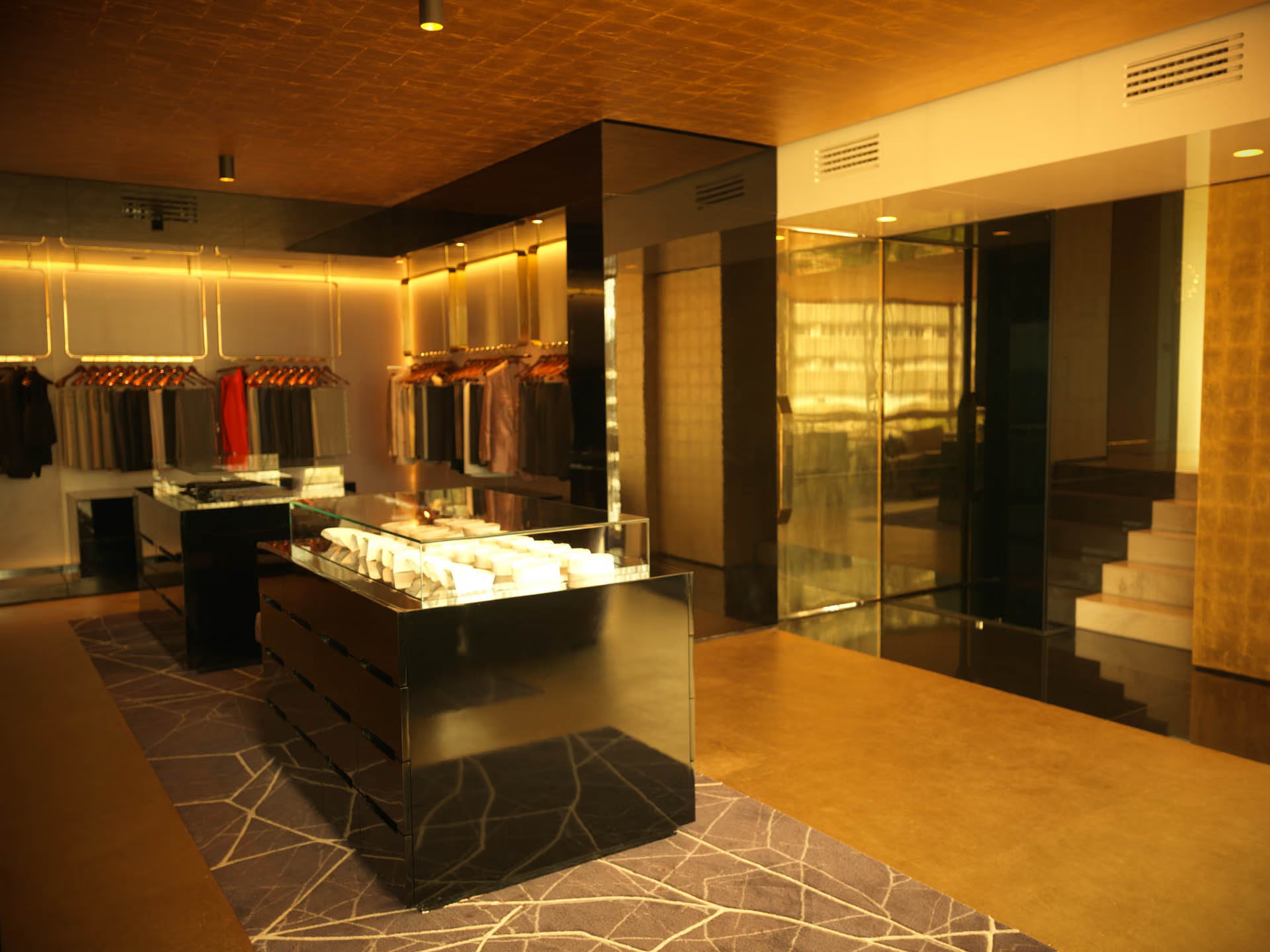


THE APPOINTMENTS
THE CONVERSATIOn
Every commission begins with conversation.
We want to understand more than what garment is required. We want to understand the life into which it will enter. Whether the wearer is an artist, a banker or an industrialist matters. So does where they live, how they travel, the rooms they inhabit, the art they respond to, the music they listen to, whether their evenings are spent entertaining or at home, and what an ordinary day asks of their clothes.
Taste is discovered in these details.
Cloth, colour, proportion and purpose begin to emerge from that understanding. Measurements are taken, but equally important are observations of physique, posture, movement and presence.
Together, these become the foundation of the commission.
THE BASTE
The first fitting is the baste, when the garment exists in its earliest physical form, almost as a shell.
Loosely assembled and deliberately unfinished, it allows us to see the relationship between cloth, cut and body for the first time.
Balance, drape, length and proportion are observed on the wearer. The line of the shoulder, the suppression of the waist, the relationship between chest and skirt, and the way the cloth responds in movement can now be judged on the body rather than imagined on the pattern.
The fitting is not a test of whether the garment is right or wrong. It is part of making it right.
What we learn is returned to the pattern and the bench.
THE FORWARD BASTE
By the forward baste, the garment has begun to take on its intended form.
The observations made at the first fitting have been absorbed into the pattern and construction. The garment returns to the body so that its balance, line and movement can be considered again with greater precision.
Sleeve pitch, length, button position and the relationship of the garment to the wearer’s posture are refined.
Each fitting brings the garment closer not simply to the body, but to the person.
THE FINAL FITTING
At the final fitting, the garment approaches resolution.
What began as conversation, observation, measurements and an individual paper pattern has passed repeatedly between hand, bench and body.
The final fitting considers the garment as a whole. Its balance, proportion, comfort and movement are seen together, and any final adjustments are made before completion.
The garment should no longer appear to have been fitted to the wearer.
It should appear to belong to them.
THE RELATIONSHIP
Delivery does not end the commission.
The House retains the client’s pattern and the knowledge accumulated through its making. Bodies change. Cloth settles. Garments are worn differently over time. That history becomes part of every subsequent commission.
Rahim Rawjee garments may return to the House for pressing, reshaping, repair and adjustment, allowing them to be cared for rather than simply replaced.
With time, the relationship deepens. The pattern becomes more informed, the choices more instinctive and the wardrobe increasingly coherent.
A commission may begin with one garment. The relationship is intended to last considerably longer.