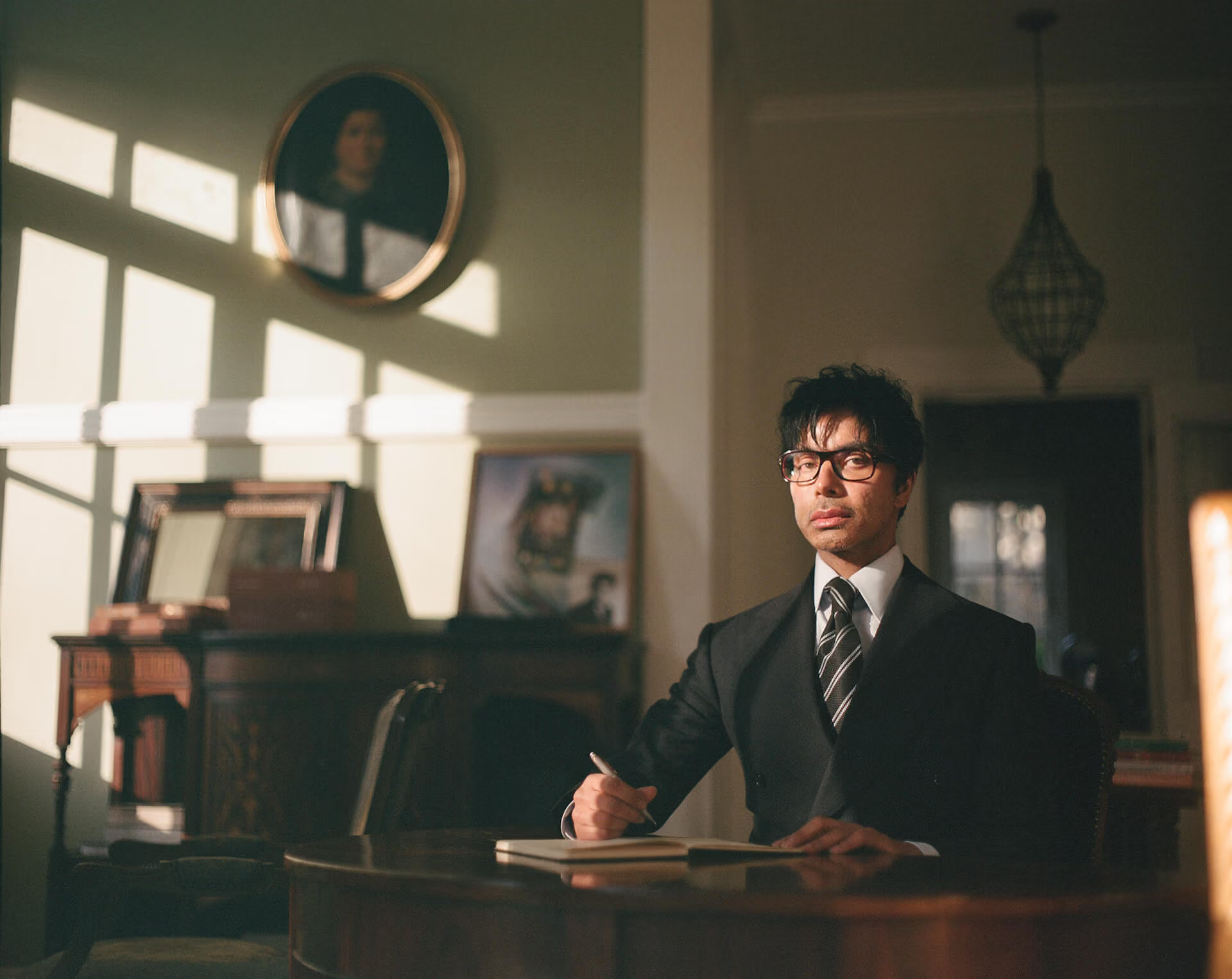
The Custodian
Rahim Rawjee is a tailor, cutter and founder of the House that bears his name. His practice is rooted in traditional bespoke tailoring and shaped by an ancestral relationship with cloth, inherited through a family lineage of cloth merchants.
Born in South Africa and trained in North America and the United Kingdom, Rawjee’s early practice developed through garment construction, design and the study of form before being refined through his time on London’s Savile Row. Alongside this, he pursued a relentless independent study of the craft, absorbing the knowledge contained in old cutting manuals and tailoring books: systems of proportion, balance and suppression; the manipulation of cloth; the diagnosis and remedy of imperfections in fit; and the relationship between cut, construction and the human form.
At the centre of his practice is the cut. Rawjee works directly with each client, from the first conversation and individual pattern through successive fittings and the finished garment. Working alongside the House’s tailors, he cuts for both men and women, approaching each commission as an individual study in proportion, character and form. His approach draws instinctively on the old tailoring principle of “rock of eye”: the cutter’s ability to see and develop the garment in the mind’s eye before transferring that understanding to paper and cloth — instinct born of experience rather than relying purely on a scientific cutting system.
His work is informed as much by culture as by tailoring: by that ancestral relationship with cloth, by Africa and the Indian Ocean, and by a deep immersion in art, architecture and design. These influences do not sit apart from the work; they form part of the language through which the House understands proportion, material, restraint and beauty.
Today the practice is centred at Bhavan, the atelier residence and home of the House. A lived-in environment where making, collecting, hospitality and conversation intersect, Bhavan extends the principles of the cutting room into a broader cultural life.
Rawjee regards his role within the House as one of custodianship: to preserve what deserves to endure, to challenge what does not, and to make work worthy of enduring beyond the moment in which it was made.
It is a belief that permanence is never accidental. It is earned through patience, refinement and an understanding of material; through work returned to again and again until nothing unnecessary remains.
